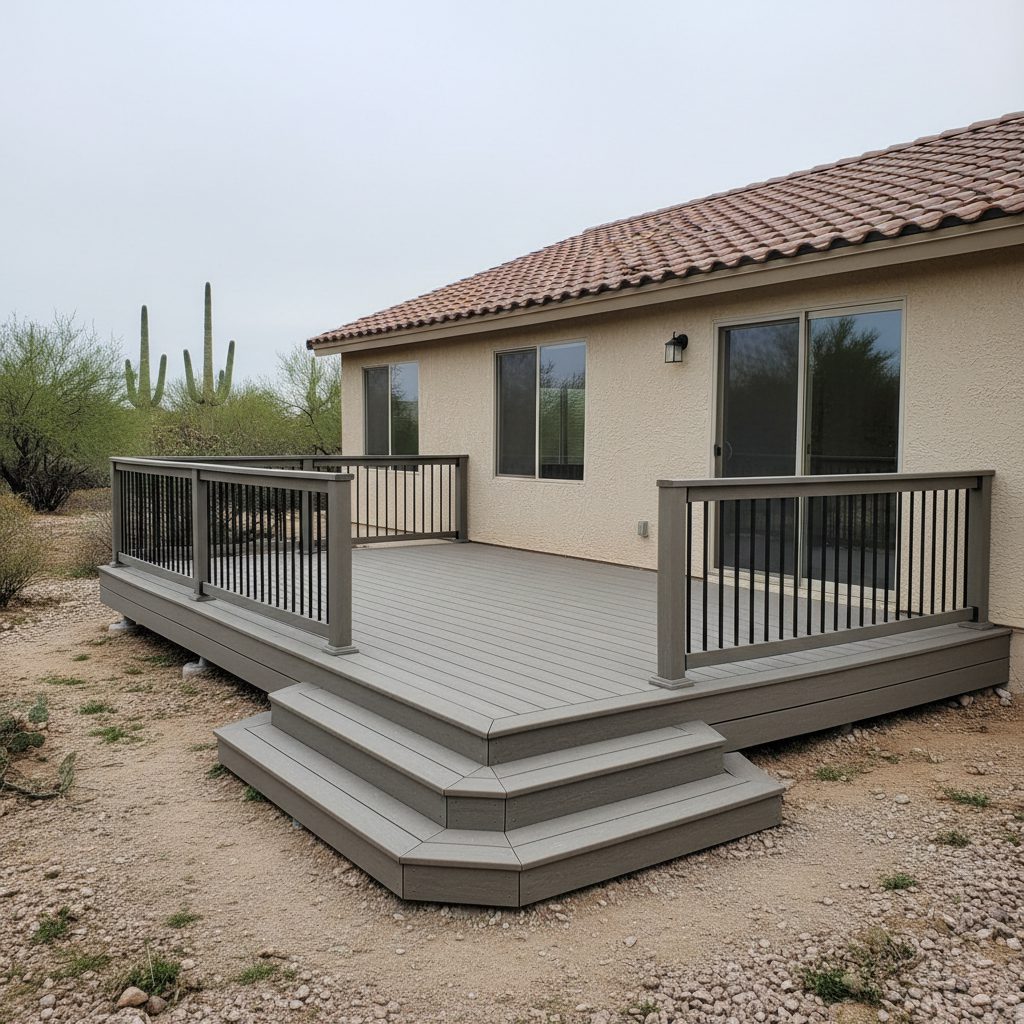
Composite boards are made from wood fiber and recycled plastic. They don't rot, splinter or attract termites, and they never need staining. For many homeowners here, that's the whole point: more evenings on the deck, fewer weekends maintaining it.
Heat is the honest caveat. Any dark surface in full Arizona sun gets hot, and composite is no exception. Lighter colors stay noticeably cooler, and shade over the seating area helps most of all. We'll bring samples so you can feel the difference yourself.
We build the frame for good airflow under the boards and use the hidden fastening system each manufacturer specifies, so the surface stays clean and the warranty stays valid.
What's included
- Color and board samples at your home
- Framing designed for ventilation
- Hidden fasteners for a clean surface
- Matching fascia, stairs and railings
- Manufacturer warranty information for your records
How it works
From first call to final walkthrough.
- 1
Tell us about your project
Send the form or call. Share the address, what you have in mind and a few times that suit you for a visit.
- 2
We visit and measure
We look at the space, the sun, the slope and how you want to use it, then talk through materials and layout with you.
- 3
You get a clear written quote
Every item and its price is listed. You can read it, download it and approve it online from your phone.
- 4
We build, then walk it with you
We keep the site tidy while we work. When it's finished we walk the whole job with you before we call it done.
Frequently asked questions
Composite Decks: what people ask.
Installed correctly, a composite deck can last 25 to 30 years or more. The boards are made to resist strong UV and the big temperature swings of the desert, and most come with long manufacturer warranties, commonly 25 years and in some cases a limited lifetime.
Composite outlasts wood in both lifespan and appearance. Proper installation and an occasional wash are what it needs to get there.
It gets warm in direct summer sun, much as concrete and pavers do. Lighter colors absorb noticeably less heat than dark ones, and several brands now make boards designed to stay cooler.
We talk through color and the direction the deck faces during design, and we bring samples so you can feel the difference in your own yard. Shade over the seating area helps more than anything else.
Very little. You never sand, stain or seal it. Sweep it regularly and wash it with soap and water a few times a year to remove dust, pollen and spills. A wash after monsoon dust storms keeps grit from building up.
That simple routine keeps the deck looking good for decades.
The material makes no difference to the rules. In general, a deck that is 30 inches or less above the ground and not attached to the house often does not need a building permit. One that is higher than 30 inches at any point, is attached to the house, sits over a basement or lower story, or has a roof or structural shade usually does.
Codes also set requirements for footings, railing height and structural strength. We check your city's rules for your design and tell you what is required before building.
Early composites did. Modern boards have a protective outer cap made to resist both, and manufacturers back that with fade and stain warranties. Expect a slight settling of color in the first few weeks outdoors, then very little change. Wipe up grease and spills rather than leaving them to bake in.
Sometimes. The frame has to be structurally sound, and the joists must be close enough together, because composite needs tighter spacing than many older wood decks have. We inspect the frame and tell you honestly whether it can be reused or whether new framing is the safer investment.
Where we offer it
Phoenix · Mesa · Tempe · Chandler · Gilbert · Scottsdale · Glendale
Free quote
Ask about Composite Decks.
Ready to talk about your project?
Tell us what you have in mind and when we could visit. Estimates are free.