All articles
Pergolas & shade
Designing a Pergola That Actually Works in Phoenix Heat
· 2 min read · Deck Builders LLC
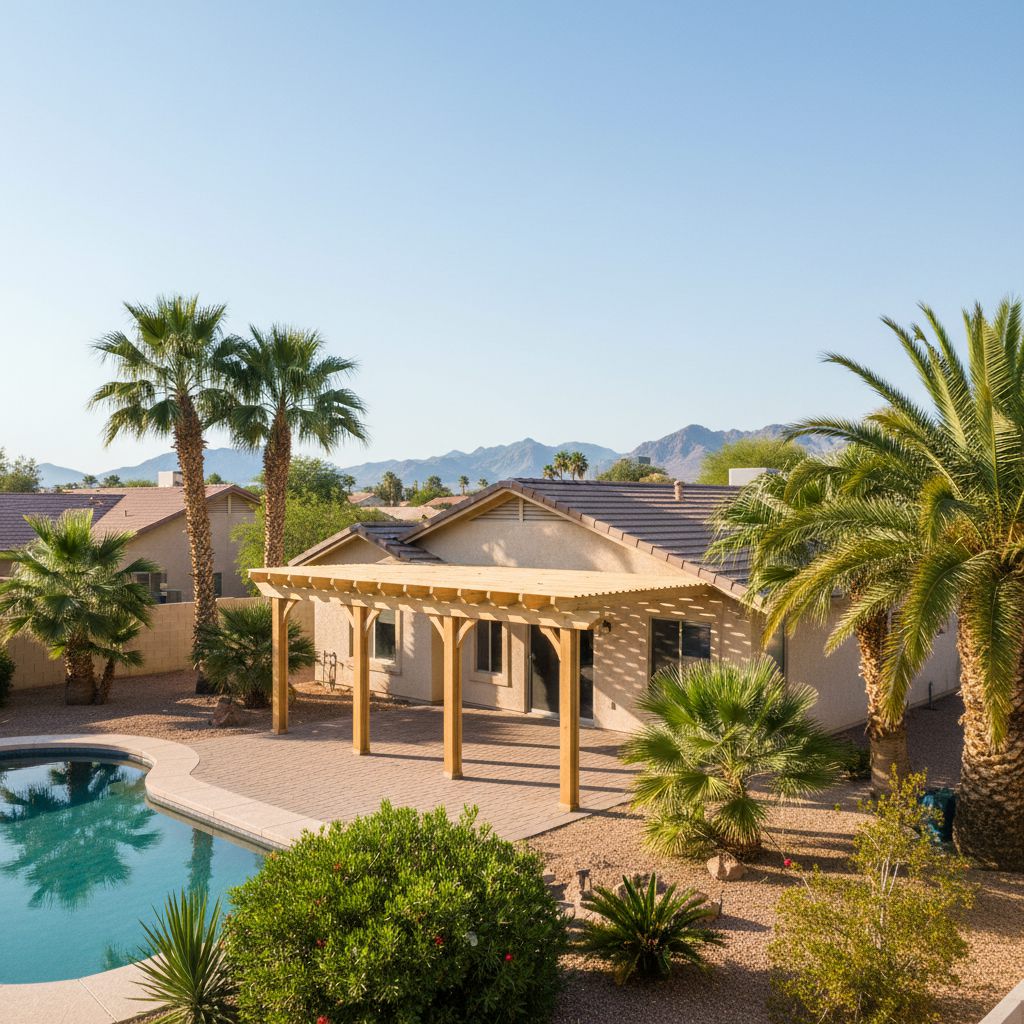
Here, a pergola is not a garden ornament. It is what makes a patio usable for more than a few months of the year.
Why it matters
Shade lowers the temperature you feel underneath it considerably, protects furniture and decking from UV, and turns a space you avoid at 4 p.m. into one you use. A well-placed pergola extends your outdoor season by months.
Materials for the desert
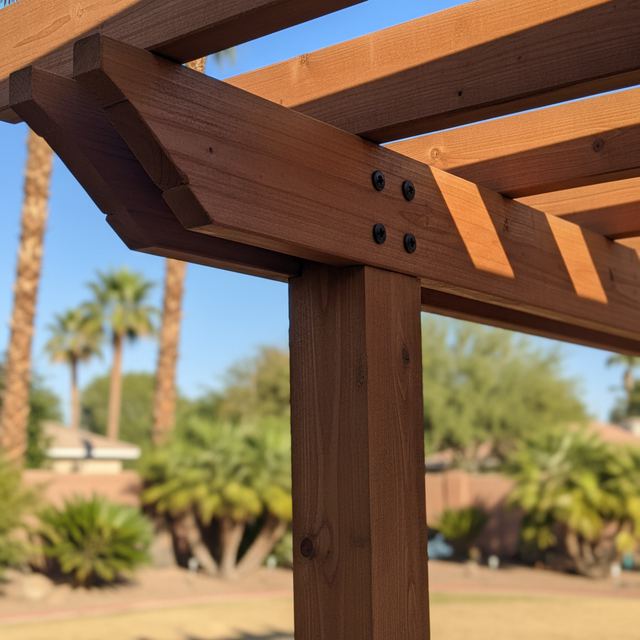
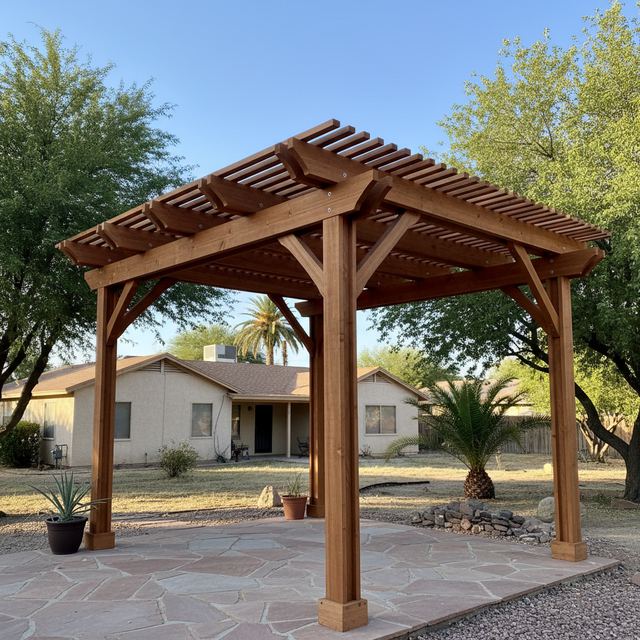
- Wood: Warm and traditional. Cedar and redwood resist rot and insects naturally; all wood needs a UV-protecting finish every couple of years.
- Aluminum: Light, strong, rust-free and powder-coated. The low-maintenance choice.
- Vinyl and composite: No painting and no rot. Quality varies, so look for a UV-stabilized product that will not turn brittle or chalky.
Design for sun, wind and water
- Sun angle: The fierce sun comes from the west in the afternoon. Slat direction, spacing and depth are set by where the sun is when you will be outside. Over a dining area, a solid section may serve better.
- Wind: Monsoon gusts put real force on a structure. Footings, post size and connections are chosen for it, and an attached pergola is fixed into the house structure, not just the fascia.
- Water: Rain comes rarely and all at once. A solid roof needs somewhere to send it, away from the patio and the foundation.
- Permits: Size and attachment decide whether one is needed. Check before building.
Useful additions
A ceiling fan moves air on still evenings. Lighting makes the space usable after dark, which is when summer is most pleasant. Both need power planned in before the posts are set.